🚨 If your only personal time happens after midnight, read this. I convinced myself for thirty-six months that binge-watching political desk comedy in the pitch black was just 'harmless unwinding.' It turns out, stealing sleep to reclaim your stolen daylight carries an invisible interest rate that almost wrecked my nervous system. Picture this routine: 11:30 PM rolls around. My work laptop closes after a grinding nine-hour shift at a tech consultancy where every manager communicates purely through urgent Slack pings. I brush my teeth, crawl under the duvet, and swear on everything holy that tonight is the night I get eight solid hours of restorative rest. Then, my thumb autonomously reaches for my phone on the nightstand. I unlock YouTube. In the recommended feed, there it is: a fresh 18-minute segment of Late Night with Seth Meyers —specifically 'A Closer Look.' I tell myself, 'Just one video. I need a laugh. Seth's sarcastic delivery about the day...
Get link
Facebook
X
Pinterest
Email
Other Apps
Stop trying to be 'frugal fannies' with your health. Here is the cheapskate tax that ended up costing me $4,200.
Get link
Facebook
X
Pinterest
Email
Other Apps
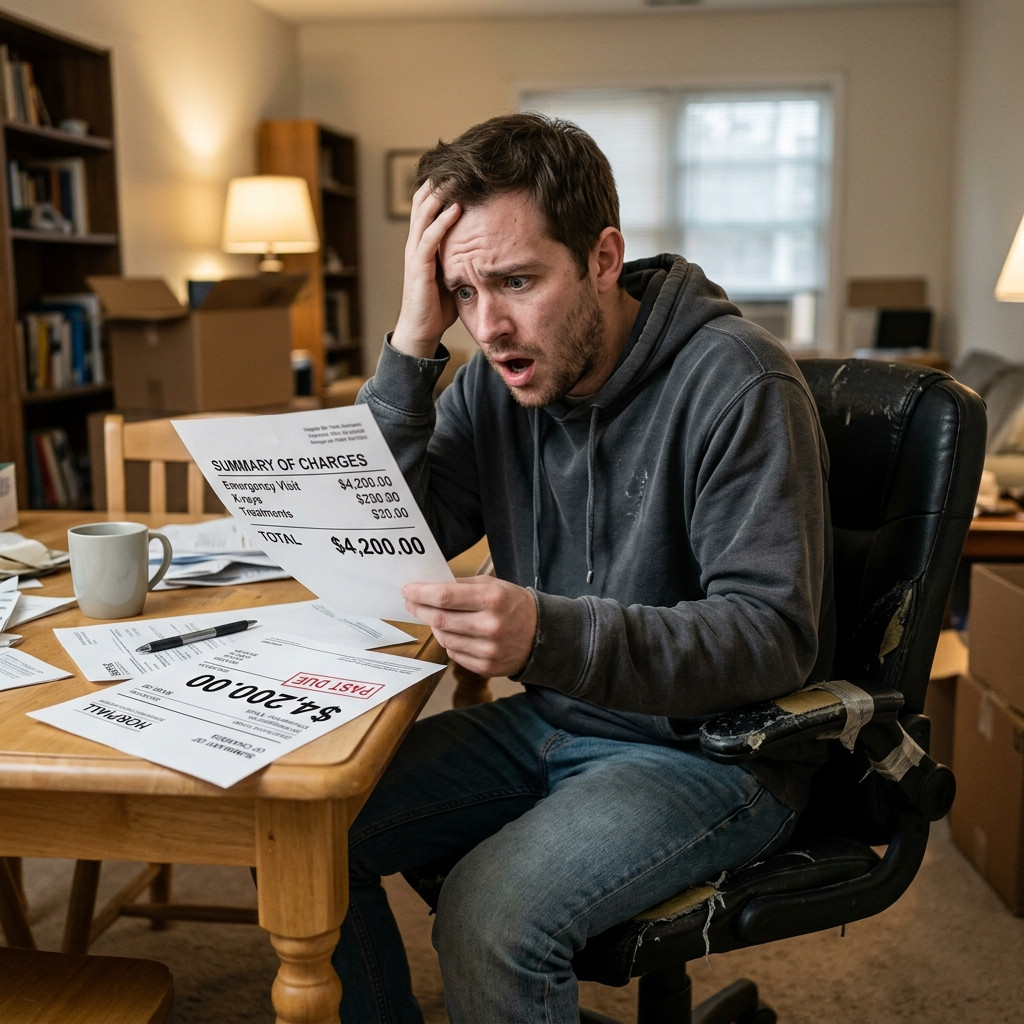
🚨 I spent three years living like a Victorian peasant to save an extra $150 a month, only to hand over $4,200 to a physical therapist and a dentist last month.
We need to have a serious talk about the toxic side of personal finance. There is a very fine line between being financially smart and being what my grandfather used to call a "frugal fanny"—someone who pinches pennies so hard they lose circulation in their brain. I used to wear that badge with pride. I was the guy who bought the absolute cheapest version of everything, bragged about my $15 monthly grocery bill, and refused to pay for professional services because "I can just look it up on YouTube."
Well, the bill for my frugality finally arrived, and it did not come with a coupon. If you are currently sleeping on a saggy mattress, sitting on a plastic folding chair for your 8-hour remote job, or skipping the dentist to pump more cash into your index funds, please read this before you bankrupt yourself trying to save a buck.
The $20 Office Chair that Cost Me $2,400 in Physical Therapy
When the work-from-home shift happened, I refused to spend money on a proper office chair. My coworkers were dropping $1,000 on Herman Millers and Steelcases. I laughed at them. "What a bunch of consumerist sheep," I thought. I went on Craigslist, found a generic, plastic-and-mesh task chair for $20, and called it a day. It had zero lumbar support, the gas cylinder was broken so it sat slightly tilted to the left, and the seat cushion felt like a stale piece of toast.
For the first year, it was fine. Sure, my lower back was a little stiff at the end of the day, but I was saving money! I put that saved cash straight into my brokerage account and watched the numbers go up. I felt like a financial genius. I was a proud member of the frugal fanny club.
By year two, the stiffness turned into a dull, constant ache. By year three, I woke up one morning, tried to bend over to tie my shoes, and experienced a white-hot, blinding flash of pain that literally dropped me to my knees. I had developed severe sciatica and a bulging disc, directly caused by sitting in a misaligned, unsupportive chair for nine hours a day, five days a week.
▲ The reality of trying to save money by using a non-ergonomic chair for remote work.
Here is how the math actually worked out on that "frugal" $20 chair:
Initial cost of the chair: $20
Co-pays for specialist consultations: $350
MRI to confirm the bulging disc: $800 (after insurance!)
12 sessions of physical therapy: $1,200
Ergonomic chair I was finally forced to buy: $650
Total cost: $3,020
If I had just bought a high-quality, ergonomic chair in the first place, I would have saved over $2,000 and avoided three months of agonizing physical pain where I couldn't even sit down to eat dinner with my family. This is the Cheapskate Tax in its purest form.
The "Cheap Food" Trap: How My Grocery Hacks Backfired at the Dentist
Another classic frugal fanny move is optimizing your diet solely for cost per calorie. I went through a phase where I lived on cheap white rice, bulk ramen, frozen processed meats, and generic canned vegetables. I stopped buying fresh berries, high-quality meats, and fresh greens because they were "too expensive" and went bad too quickly. I was spending about $120 a month on food and felt incredibly smug about it.
I also stopped going to the dentist for my bi-annual cleanings. Why pay a $50 co-pay twice a year when my teeth felt perfectly fine? I brushed and flossed (mostly), so I figured I was good. I told myself I was saving $100 a year plus the cost of any potential procedures.
Two years of a high-carb, highly acidic, low-nutrient diet combined with skipping dental cleanings caught up to me. I started getting a throbbing pain in my upper left molar. I ignored it for a month, chewing on the right side of my mouth and taking generic ibuprofen (because name-brand Advil is a scam, obviously).
Eventually, the pain became unbearable. I couldn't sleep. I finally dragged myself to the dentist. The verdict? A massive cavity that had reached the root, requiring an immediate root canal and a crown, plus three other moderate cavities that needed fillings. My poor diet had weakened my enamel, and the lack of professional cleanings allowed plaque to calcify in areas I couldn't reach with a cheap toothbrush.
The damage: $1,200 out of pocket after my mediocre dental insurance. That is twelve years worth of preventative cleanings wiped out in a single afternoon of drilling. I saved pennies on groceries and routine care, only to write a massive check to an endodontist.
The Rules of "Good" Frugality vs. "Fanny" Frugality
I had to completely tear down and rebuild my philosophy on money after these disasters. Real frugality isn't about spending the least amount of money possible; it is about maximizing the value of every dollar spent. When you buy trash, you end up paying for it twice: once when you buy it, and again when it breaks, hurts you, or ruins something else.
Here is the framework I use now to avoid falling back into the cheapskate trap:
1. The "Between You and the Ground" Rule
Never, under any circumstances, cheap out on things that separate your body from the ground. This includes:
Mattresses: You spend a third of your life on it. A bad mattress ruins your sleep, which ruins your productivity, your mental health, and eventually your spine.
Shoes: Cheap shoes with no support will wreck your ankles, knees, hips, and lower back. Buy high-quality footwear and replace them when the tread wears out.
Tires: Your life literally depends on the four patches of rubber touching the asphalt. Cheap tires have terrible stopping distances in the wet and wear out twice as fast.
Office Chairs: If you sit for a living, your chair is a medical device. Treat it like one.
2. Calculate the "Cost Per Use" Instead of the Sticker Price
A $150 winter coat that lasts you seven years costs you $21.40 a year. A $40 fast-fashion coat that falls apart after one season and needs to be replaced costs you $40 a year. The more expensive item is actually the cheaper option over time. This is the classic Sam Vimes "Boots Theory" of economic unfairness, and it applies to almost everything from kitchen knives to power tools.
3. Never Skip Preventative Maintenance
This goes for your body, your car, and your house. Changing your car's oil for $50 prevents a $5,000 engine replacement. Getting your teeth cleaned prevents root canals. Cleaning your gutters prevents water damage that rots your home's foundation. The absolute dumbest way to save money is by ignoring things that are slowly deteriorating.
Stop Glorifying the Struggle
There is a weird subculture online where people compete to see who can live the most miserable existence in the name of saving money. They brag about keeping their thermostat at 50 degrees in the winter, washing zip-loc bags to reuse them, and driving on bald tires to squeeze another 5,000 miles out of them.
That isn't financial freedom; it's a self-imposed prison sentence. Money is a tool to facilitate a secure, healthy, and comfortable life. If you are sacrificing your physical health, your mental well-being, and your safety just to see a spreadsheet number go up, you are using the tool wrong.
Take care of your body. Buy the decent shoes. Get the dental cleaning. Invest in a chair that doesn't actively try to herniate your discs. Trust me, your bank account will actually thank you in the long run.
TL;DR: The Cheapskate Tax is Real
Being excessively cheap on physical essentials (chairs, shoes, mattresses, preventative healthcare) always ends up costing more in the long run. Real frugality is about spending money intentionally on high-quality items that protect your health and last for years, rather than constantly buying cheap garbage that leads to medical bills or frequent replacements.
"Your chronic fatigue and brain fog aren't a lack of willpower—they're a lack of gut microbes." Welcome to the era of Fibermaxxing. In 2026, Silicon Valley executives and biohackers are dropping extreme diets to focus on the ultimate performance enhancer: The Gut-Brain Axis. 1. The End of the Protein Obsession For years, fitness culture was entirely obsessed with "high protein, low carb." We filled our fridges with chicken breasts and protein powders. But as we move deep into 2026, the paradigm has shifted. High performers are now turning their attention away from protein and toward Fiber . Enter 'Fibermaxxing' . Instead of restricting food groups and inducing metabolic stress, people are dramatically increasing their intake of complex, high-quality fibers—like lentils, beans, and whole grains—to reduce systemic inflammation and unlock ...
The 2026 Wellness Shift: Why 'Sleep Recovery' is the Ultimate Weight Loss Hack "I am eating less and working out endlessly, but the scale won't budge." This is the universal frustration of chronic dieters. However, as we move through 2026, the global wellness industry and viral TikTok trends have abruptly shifted focus away from high-intensity workouts and extreme caloric deficits. Today, top fitness experts and Silicon Valley biohackers are obsessed with one metric above all else: Data-Driven Sleep Recovery . When you are sleep-deprived, your body enters a state of primal emergency, aggressively storing fat around your midsection. Conversely, when you optimize your sleep architecture, your body becomes an ultra-efficient fat-burning furnace overnight. In this deep dive, we explore the trending science behind the sleep-optimization diet and provide actionable protocols you can implement tonight to transform your metabolism. Photo: Cultivatin...
🌙 When was the last time you woke up actually feeling rested? Let’s be honest. Surviving the morning on three cups of coffee and doom-scrolling until 2 AM despite being exhausted has become the norm for too many of us. But in 2026, the global elite and high-performing Millennials are flipping the script. They aren't boasting about running on 3 hours of sleep anymore. Instead, they are obsessing over 'Sleepmaxxing' —the art of using cutting-edge Sleep Tech to hack their biology and achieve the most brutally efficient, restorative deep sleep possible. 1. Quality Over Quantity: The Era of 'Amplified Efficiency' It's no longer just about sleeping for 8 hours; it's about how you sleep. The 2026 sleep industry is dominated by the concept of 'Amplified Efficiency.' High-achievers are aiming to get the restorative equivalent of 10 hours of sleep in just 6 hours. How? Through active intervention. AI-pow...



Comments
Post a Comment