🚨 If your only personal time happens after midnight, read this. I convinced myself for thirty-six months that binge-watching political desk comedy in the pitch black was just 'harmless unwinding.' It turns out, stealing sleep to reclaim your stolen daylight carries an invisible interest rate that almost wrecked my nervous system. Picture this routine: 11:30 PM rolls around. My work laptop closes after a grinding nine-hour shift at a tech consultancy where every manager communicates purely through urgent Slack pings. I brush my teeth, crawl under the duvet, and swear on everything holy that tonight is the night I get eight solid hours of restorative rest. Then, my thumb autonomously reaches for my phone on the nightstand. I unlock YouTube. In the recommended feed, there it is: a fresh 18-minute segment of Late Night with Seth Meyers —specifically 'A Closer Look.' I tell myself, 'Just one video. I need a laugh. Seth's sarcastic delivery about the day...
Get link
Facebook
X
Pinterest
Email
Other Apps
Stop letting your 'Fat Bear Week' instincts ruin your budget. Why you are suddenly starving, exhausted, and spending $300 more on food every October.
Get link
Facebook
X
Pinterest
Email
Other Apps
🚨 I looked at my bank statement last night and wanted to throw up.
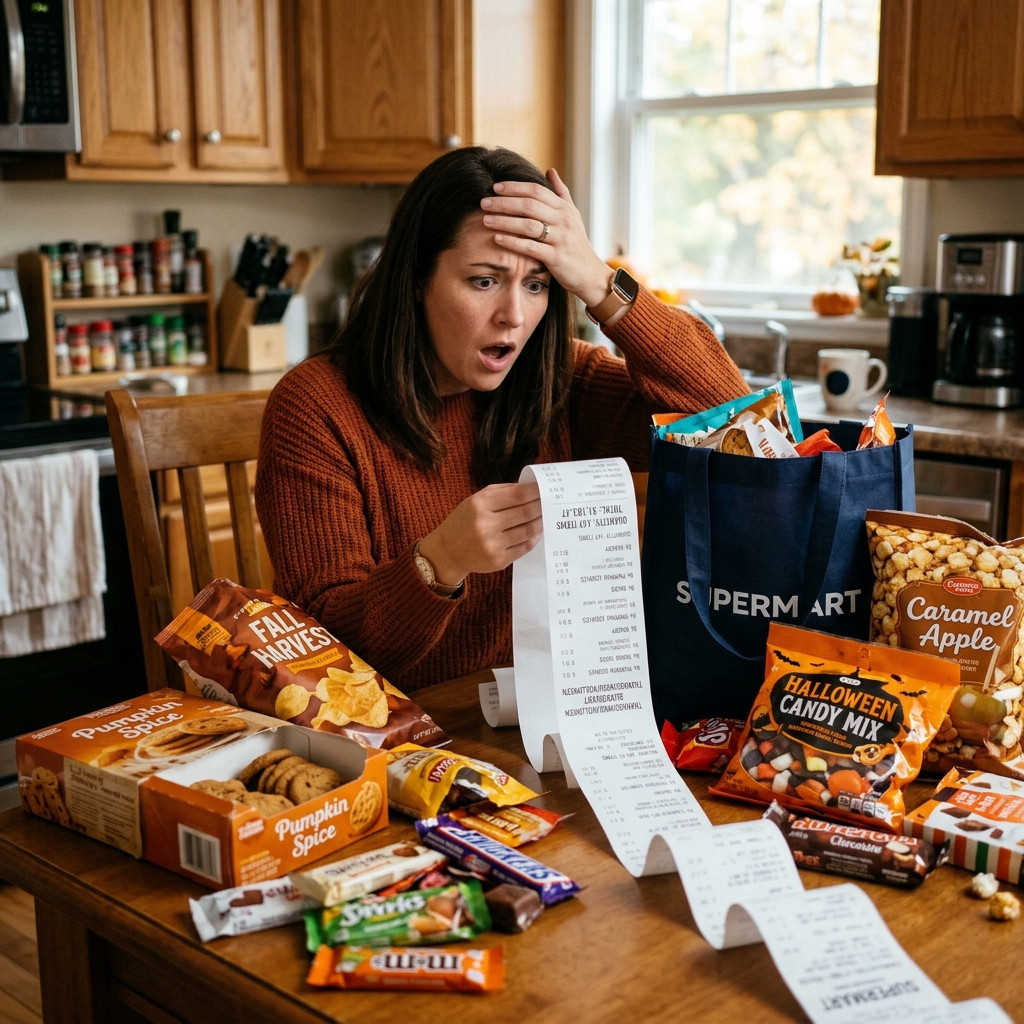
I’ve spent $450 more on groceries, takeout, and random snacks over the last three weeks than I did in all of August. I haven't been buying fancy dinners or caviar. I’ve just been... chronically starving, exhausted, and desperately craving heavy, expensive carbs. Then it hit me: I’m accidentally doing Fat Bear Week, and my bank account is paying the price.
Every October, the internet obsesses over Fat Bear Week—that glorious competition where we vote on the chonkiest brown bears in Katmai National Park as they gorge themselves on salmon to survive the winter. We laugh, we make memes, and we celebrate 480 Otis or 747 for being absolute units. But here is what we don’t talk about: humans have those exact same evolutionary urges, and our modern consumer culture has weaponized them to bleed us dry every single autumn.
If you have found yourself staring blankly into your fridge at 9:00 PM, ordering a $35 lukewarm ramen delivery because you "just can't even" cook, or walking out of Trader Joe's with $180 worth of pumpkin-spiced things you didn't need, you are not lazy. You are just a mammal trying to survive a winter that isn't actually coming. Here is why this happens, how corporations exploit it, and how you can fight your own biology to keep your savings intact.
The October Slump: Why Your Body Thinks It's a 1,000-Pound Grizzly in Alaska
Let's look at the actual science of why you feel like a bottomless pit the moment the leaves turn yellow. As the days get shorter, your exposure to sunlight plummets. This triggers a massive drop in serotonin (the feel-good neurotransmitter) and a spike in melatonin (the hormone that makes you want to sleep for twelve hours). Your brain, which is still running on software designed 50,000 years ago, panics. It interprets the dark, cold environment as an incoming period of scarcity.
To fix the serotonin drop, your brain demands fast-acting dopamine hits. And what is the easiest way to get dopamine? Simple carbohydrates and fats. Your body is literally screaming at you to eat heavy, calorie-dense foods because it thinks you need to build up a layer of blubber to survive a blizzard in a cave. You aren't weak-willed; you are experiencing seasonal hyperphagia—the exact biological state that bears enter before hibernation.
▲ Your biological urge to bulk up for winter often leads to massive seasonal spending spikes at the grocery store.
But here is the difference: a grizzly bear catches wild salmon and eats berries off a bush for free. You are buying a $9 artisan sourdough loaf, a $14 block of imported gruyère, and ordering DoorDash because the sun set at 5:30 PM and your brain-fog is so thick you can't remember how to boil pasta. Your biological urge to bulk up is meeting the most predatory, high-convenience food economy in human history, and it's a financial disaster.
How Grocery Stores and Delivery Apps Weaponize Your Seasonal Biology
If you think the sudden explosion of "cozy season" marketing is just innocent autumn fun, you are the target. Supermarkets and delivery apps know exactly when your defenses are down. They track the weather and the daylight savings transition with terrifying precision. The moment the temperature drops below 60 degrees, the entire retail landscape shifts to exploit your instinctual need to nest and hoard.
First, they hit you with the "cozy aesthetic." Warm lighting, cinnamon scents piped through the vents, and displays of heavy, comforting foods right at the entrance. You came in for eggs and spinach, but your primitive brain sees a display of maple-glazed pecans and pumpkin-shaped cookies and thinks, "Yes, we must store these calories for the dark times."
Second, delivery apps ramp up their push notifications right around dusk. When that 5:00 PM darkness hits and your serotonin levels crater, your phone buzzes with a "free delivery" offer for a warm, savory bowl of curry or a massive pizza. They are selling you convenience at the exact moment your biological energy is at its absolute lowest. It’s a perfect psychological trap.
Myth-Busting: You Don't Need 'Heavy' Comfort Foods to Stay Warm
We have been conditioned to believe that autumn and winter require "heavy" eating. We convince ourselves that we need thick stews, creamy pastas, and massive portions of meat and cheese to keep our internal furnaces burning. This is a myth. In the modern world, your apartment has central heating, you wear a synthetic down jacket, and your commute is heated. You do not need an extra 500 calories a day to maintain your body temperature.
When you eat those massive, carb-heavy meals, you aren't actually warming yourself up; you are just inducing a food coma. The temporary spike in blood sugar is followed by an inevitable crash, which makes you feel even more exhausted, cold, and hungry three hours later. It’s a vicious cycle that keeps you spending money on snacks and caffeine to stay awake. Real warmth and energy come from consistent, nutrient-dense foods that don't cause massive insulin spikes.
My 4-Step 'Anti-Hibernation' Protocol to Save $300 This Month
Once I realized my biology was being played, I set up a system to fight back. I managed to cut my food and grocery spending back down to summer levels without starving myself or feeling miserable. Here is the exact protocol I use to outsmart my inner bear:
1. The 'Warm and Cheap' Complex Carb Swap
You cannot fight the biological urge for carbs in October—if you try to live on raw kale salads, you will fail, lose your mind, and order a whole pizza at midnight. Instead, lean into cheap, slow-burning complex carbs. Swap out the expensive artisan breads and processed snacks for giant bags of sweet potatoes, steel-cut oats, and lentils.
A massive sweet potato roasted with olive oil, salt, and chili powder costs about 80 cents, takes zero effort, and keeps your blood sugar stable for hours. Oatmeal made with cinnamon and a handful of frozen berries mimics the "cozy" seasonal vibe for pennies per serving, giving your brain the warm comfort it wants without the financial or physical crash.
2. The 2 PM Sunlight Hack
The 5:00 PM delivery app trap is real. To beat it, you have to tackle the light deficiency that causes the craving in the first place. I started forcing myself to take a 15-minute walk outside every single day at 2:00 PM, regardless of how cold or cloudy it was. Getting natural light into your eyes in the afternoon regulates your melatonin production and prevents that massive energy crash when the sun goes down.
If you work in a windowless cubicle or live in a place with zero winter sun, invest in a cheap 10,000 lux light therapy lamp (you can find them for $20 online). Turn it on at your desk for 30 minutes in the morning. It sounds silly, but it completely stops the late-afternoon "I need sugar/grease right now" panic signals.
3. Keep a 'Zero-Effort' Emergency Meal in the Freezer
The primary reason we spend $30 on takeout in the autumn isn't because we want to spend money; it's because we are too tired to cook. When it's dark outside, your brain tells you that standing over a stove for 45 minutes is equivalent to climbing Mount Everest. You need to lower the barrier to entry for a home-cooked meal.
Always keep three or four "zero-effort" meals in your freezer. This isn't meal prepping (which requires energy you don't have right now). This is literally buying cheap frozen dumplings, a bag of frozen edamame, and some frozen fried rice. When you are exhausted, throwing frozen potstickers into a pan takes five minutes and costs $3. It prevents the $30 delivery app order every single time.
4. The 'Fake Comfort' Rule
Often, when your brain is screaming for comfort, it’s actually just asking for sensory warmth and hydration. We mistake thirst and mild chilliness for hunger. Before you open any food delivery app or raid the pantry, you must drink a massive mug of hot, decaf tea or hot water with lemon.
The physical act of holding a warm mug and drinking a hot liquid tricks your brain into feeling cozy and satisfied. It satisfies the sensory need for warmth without adding a single calorie or spending a single dollar. If you are still starving twenty minutes after finishing the tea, go ahead and eat—but nine times out of ten, the urge to binge on expensive snacks will have completely passed.
TL;DR: How to Beat the Autumn Wallet Drain
Understand the Biology: Shorter days trigger seasonal hyperphagia (the urge to eat carbs and sleep), making you crave expensive convenience foods.
Avoid the Cozy Marketing: Grocery stores and delivery apps use autumn aesthetics to exploit your low energy and seasonal cravings.
Swap the Carbs: Eat cheap, slow-burning complex carbs like sweet potatoes and oats instead of expensive processed comfort foods.
Get Light: Take a walk at 2:00 PM or use a light therapy lamp to stop the dark-induced serotonin crash.
Keep Emergency Frozen Meals: Stop $30 takeout orders by keeping $3 high-convenience frozen meals ready to go.
"Your chronic fatigue and brain fog aren't a lack of willpower—they're a lack of gut microbes." Welcome to the era of Fibermaxxing. In 2026, Silicon Valley executives and biohackers are dropping extreme diets to focus on the ultimate performance enhancer: The Gut-Brain Axis. 1. The End of the Protein Obsession For years, fitness culture was entirely obsessed with "high protein, low carb." We filled our fridges with chicken breasts and protein powders. But as we move deep into 2026, the paradigm has shifted. High performers are now turning their attention away from protein and toward Fiber . Enter 'Fibermaxxing' . Instead of restricting food groups and inducing metabolic stress, people are dramatically increasing their intake of complex, high-quality fibers—like lentils, beans, and whole grains—to reduce systemic inflammation and unlock ...
The 2026 Wellness Shift: Why 'Sleep Recovery' is the Ultimate Weight Loss Hack "I am eating less and working out endlessly, but the scale won't budge." This is the universal frustration of chronic dieters. However, as we move through 2026, the global wellness industry and viral TikTok trends have abruptly shifted focus away from high-intensity workouts and extreme caloric deficits. Today, top fitness experts and Silicon Valley biohackers are obsessed with one metric above all else: Data-Driven Sleep Recovery . When you are sleep-deprived, your body enters a state of primal emergency, aggressively storing fat around your midsection. Conversely, when you optimize your sleep architecture, your body becomes an ultra-efficient fat-burning furnace overnight. In this deep dive, we explore the trending science behind the sleep-optimization diet and provide actionable protocols you can implement tonight to transform your metabolism. Photo: Cultivatin...
🌙 When was the last time you woke up actually feeling rested? Let’s be honest. Surviving the morning on three cups of coffee and doom-scrolling until 2 AM despite being exhausted has become the norm for too many of us. But in 2026, the global elite and high-performing Millennials are flipping the script. They aren't boasting about running on 3 hours of sleep anymore. Instead, they are obsessing over 'Sleepmaxxing' —the art of using cutting-edge Sleep Tech to hack their biology and achieve the most brutally efficient, restorative deep sleep possible. 1. Quality Over Quantity: The Era of 'Amplified Efficiency' It's no longer just about sleeping for 8 hours; it's about how you sleep. The 2026 sleep industry is dominated by the concept of 'Amplified Efficiency.' High-achievers are aiming to get the restorative equivalent of 10 hours of sleep in just 6 hours. How? Through active intervention. AI-pow...



Comments
Post a Comment